Showing posts with label scribes. Show all posts

Thursday, January 22, 2015

016-Bad Traditions

Jesus speaks out against laws and traditions that divide people.
He reinterprets and creates new laws and traditions that promote
positive social connections.

It’s been a while since we last studied Mark – since before the Advent season. And then there were people out and illnesses and such so that we didn’t return to it. We are finally back, though it looks like we will skip this next week again due to some people going out of town.

imageThis next bit is from the study outline and provides the introduction for the current passage:

Mark chapter 7 is at the center of the unit that goes from chapter 6 to 8. Chapter 6 opened with Jesus’ rejection in Nazareth and his sending out of the apostles. This story was interrupted by the account of John the Baptist’s execution which asked the question, Who is Jesus? Upon their return the feeding of the five-thousand (in Jewish territory) occurs. Chapter 8 closes the unit with the feeding of the four-thousand (in Gentile territory) and Jesus asking his disciples, Who am I?

Chapter 7 in the center discusses traditions surrounding Jewish ritual purity and a story about Gentile woman. This entire unit serves to reveal what purity (or holiness) means and who is included in God’s kingdom.

We must be careful when reading today’s passage. It has sometimes been used to justify anti-Semitism, or at the very least denigrate Judaism. It has been used by “low-church” Christians to unfairly attack Christians who value and practice much more ritualized forms of Christianity. It has been used by one Christian group to criticize other groups who don’t belong for beliefs and practices that the first don’t believe or practice.

Here are some questions then that we ought to keep in mind as we study this text:

  • Are all “traditions” bad? And what does Jesus/Mark mean by the term?
  • What is Jesus/Mark attempting to communicate about purity and holiness?
  • What did Jesus/Mark mean when he writes, “Thus he declared all foods clean” (v.19b)?

Some of the key points from the discussion are:

  • Religious/theological context: The Jews (Pharisees, Sadducees, Essenes, Jesus, and more) were all invested in the proper interpretation of the Law/Torah and with purity/holiness. The point of contention between them all were the specifics of what it meant. This was an internal debate within Judaism. It was not a Christians vs. Jews debate about legalism/tradition vs. grace/salvation. Many Jews believed that a proper observance of the Law was a necessary prerequisite to the arrival of the Messiah. For a self-proclaimed rabbi (Jesus) to speak out against popular beliefs and observances about Law and tradition was unthinkable – it would have been seen as deliberately placing an obstacle to the Messiah’s arrival.
  • The problem with the Pharisaic/scribal tradition was that they placed observance of the Law and traditions above promoting good social relationships. According to the scribal traditions, the plain-reading of the Law could be violated if a person could show that God could be reverenced, worshiped and honored more through ignoring the Law. What Jesus appears to be implying by his rebuttals is that one cannot honor God if human relationships suffer as a result of such “honoring.” Paul seems to follow this line of thought in Romans 13:8-10 when he writes that all the Law (including worship and honor of God) is fulfilled by promoting good human relationships (love).
  • The Law of Moses encourages separation to attain purity/holiness. Jesus says that genuine purity and holiness comes from associating with the unclean and defiled; to encounter and touch them in order to transmit healing and holiness to the suffering and downtrodden. Relationships must never become slaves to rigid applications of laws and traditions. It is in this light that Jesus (Mark’s interpretation) dismisses Jewish food laws regarding the clean and unclean. As long as this law remains, the future of the Jesus movement will never go beyond Jews. As long as table-fellowship is segregated, the full picture of God’s inclusiveness will remain hidden. God’s holiness compelled him to become human, to take on defilement, in order that the defiled might become holy.

imageThough baptism has long been associated with cleansing and forgiveness of sin, it has for just as long been associated with the deeply unclean death of Jesus. When we are baptized, we are joined to Jesus’ death as well as his resurrection (Rom. 6:3–5). Thus, baptism does not remove us from the stains of the world, but joins us to blood, dirt, and anguish, and to all those whom the world regards as unclean.[1]


[1] Feasting: Mark, location 7140.

Saturday, August 23, 2014

007-Misunderstood and Misinterpreted

Those in God’s family are the ones
who are open to doing his mysterious will.

Two major topics concern us in this passage:

  1. What is the unpardonable sin?
  2. Who is inside God’s family and what is a primary characteristic?

The two seem unrelated, yet Mark’s arrangement of rhetoric in these verses suggest that they are very much related. This is the first instance of a clearly arrange “sandwich” rhetoric. Verses 20-21 begin an episode involving Jesus and his family. Verses 22-30 interrupt the family story to interject a confrontation with the scribes. Verses 31-35 resume the family story interrupted earlier.

For the original audience of this text, this passage serves as a reminder that Jesus himself suffered rejection from his immediate family and thus it should not surprise his followers when they are too. It is an encouragement to understand that the new family composed by Jesus is not based on blood relations, but on behavior. (Wait! That sounds like salvation by works! No, behavior is the outward display of one’s heart condition. Heart and action are one unit.)

Family – Part One

imageJesus returns home to Nazareth (some say Capernaum, but I think Nazareth makes the best sense here). He is outside with the crowd, teaching, healing, and exorcising (though not mentioned specifically, we can assume his activities do not change from earlier). He and his disciples are so busy none of them even stop to eat.

The family thinks Jesus has become insane with his obsession. They are ashamed of his behavior. They are afraid of what the authorities might do in response to Jesus’ direct confrontations with them. So they act to intervene. They plan to forcibly seize Jesus and make him stop.

How often do we see God working in ways that contradict our traditions and desires? Do we want “seize him” and make him do what we want? Do we ever want to control God?

Scribes

The scribes make a lengthy journey from Jerusalem to check out Jesus’ activities. The conclude he is possessed by Beelzebul and that his activities are a result of demonic power.

imageMark places the statement of the scribes close to “he is insane” statement by his family to show his audience that neither group believed in Jesus; that both statements have a degree of difference but in matter of faith they are identical.

When the scribes accuse Jesus of having Beelzebul and of using that demon's power to perform exorcisms, the audience would have understood that the charge was that of practicing magic. Magicians were believed to have gained control of spirits that they could call upon to do their bidding…[1]

Jesus’ family wanted to control Jesus. Who was really possessed?

Jesus responds to the second accusation (that he is working through demonic power) by a set of parables (argument from analogy). He points out how illogical their statements are. He concludes the series of parables with one about a thief and a strong man.

The clear implication is that Jesus is the thief who binds the strong man, Satan, in order to plunder his house. Jesus as thief! Jesus binding someone! Jesus plundering a house! I have never seen a stained-glass window featuring this as an image of Christ.[2]

The Unpardonable Sin

Jesus responds to the first accusation (that he is possessed by Beelzebul) by discussing the sin of blasphemy that cannot be forgiven. It needs to be understood that Jesus is not introducing a new concept, but simply pointing out that the scribes’ own traditions warns about blasphemy that cannot be forgiven.

This solemn warning must be interpreted in the light of the specific situation in which it was uttered. Blasphemy is an expression of defiant hostility toward God… The scribal tradition considered blasphemy no less seriously than did Jesus. “The Holy One, blessed be he, pardons everything else, but on profanation of the Name [i.e. blasphemy] he takes vengeance immediately.” This is the danger to which the scribes exposed themselves when they attributed to the agency of Satan the redemption brought by Jesus… In this historical context, blasphemy against the Holy Spirit denotes the conscious and deliberate rejection of the saving power and grace of God released through Jesus' word and act… The failure of the scribes to recognize him as the Bearer of the Spirit and the Conqueror of Satan could be forgiven. The considered judgment that his power was demonic, however, betrayed a defiant resistance to the Holy Spirit. This severe warning was not addressed to laymen but to carefully trained legal specialists whose task was to interpret the biblical Law to the people. It was their responsibility to be aware of God's redemptive action. Their insensitivity to the Spirit through whom Jesus was qualified for his mission exposed them to grave peril. Their own tradition condemned their gross callousness as sharply as Jesus' word. The admonition concerning blasphemy of the Holy Spirit is not to be divorced from this historical context and applied generally.[3]

imageThe unpardonable sin is one in which a person becomes so confused that good is evil and evil is good. It is the case where a person becomes so convinced of his “rightness” that nothing can convince him or her otherwise. The scribes were so convinced that their interpretations and traditions were correct that the only way they could explain away Jesus’ activities was to attribute them to Satan.

It is one thing to stick to one’s tradition. It is another to deny the possibility that God might have something new to say, even if it comes through your presumed enemy.[4]

In what ways might we be dismissing or wrongfully attributing acts of God to something evil? Are we so steeped in our Christian and denominational “tribalism” that we only see right within ourselves and cannot come to see God at work in other “tribes” out there, even ones that don’t claim to know Christ? Can our zeal for doctrinal purity lead us on the path toward the unpardonable sin?

Those who are most rigidly convinced they are right may be in the most danger of the unpardonable sin.

Family – Part Two

The family narrative resumes. Jesus’ family have come to where he is teaching, but they cannot make their way into the crowd. They are outsiders. Jesus, too, is on the outside but he is among his family. His family relay a message to Jesus. The crowd near him notifies him that his family is calling for him outside.

Jesus asks a question of the crowd, “Who are my mother and my brothers?” and then proceeds to answer it himself.

And looking about at those who sat around him, he said, "Here are my mother and my brothers! For whoever does the will of God, he is my brother and sister and mother." (vv.34-35, ESV)

imageJesus is outside the confines of culture and tradition, but he is inside his family. All those who do God’s will are also his family. In contrast those who seek to control him or those who refuse to acknowledge the motivation and source of his activities are outside his family.

The idea of control and magic come back around and would have been understood easily by Mark’s original audience, but not necessarily so with us today:

The clinching argument against the charge of practicing magic is the claim that Jesus and his family "do the will of God." This was a common argument made by ancient miracle workers who were accused of being magicians… In the ancient world, the pious instrument of the gods distinguished herself or himself from the magician by insisting that whereas the magician forced the gods to do the magician's will, the pious miracle-worker did only the will of the gods. Thus, when the author of Mark portrays Jesus and his followers as those who "do the will of God," he is relying on commonly accepted modes of argumentation to make his point. Such a defense was a necessary component of any biography of a wonder-worker in antiquity because the person that one group claimed as a holy man would inevitably be regarded as a magician by competing groups…[5]

Jesus, the Feminist

Among the details of these last verses is often missed Jesus’ pointed rejection of patriarchal culture and religion, and instead his support for an inclusive, egalitarian community.

imageOut of nowhere Jesus introduced “sister” in verse 35. Not only does he add sister, but he never mentions “father” anywhere in his description of his new family, the church. What should we make of this? Is this just random familial relationships that Jesus picked blindly from a bag? Or is Mark using this specific statement to help us understand something greater and deeper in Jesus’ words? I believe it is this latter.

In a patriarchal society, to omit “father” from a description of family relationships would have been unthinkable. For Jesus to do so had to have been intentional and with a point. Jesus is saying that within his family, the only father is God himself. No one else in his family is granted the kind of authority that was taken as normal for fathers in their society. In other words, the kind of top-down, authoritarian, hierarchical authority has no place in the church.

Secondly, by including “sister” as well as leaving “mother” in the list of family members as he looked around his followers, he acknowledges the existence, value, and importance of women disciples in his family. They stand alongside the men as equal in all respects in his new family. The men are not to have special roles over the women and vice versa.

Whereas Mark’s context is a patriarchal one, through the use of “sister” and “mother” the writer declares the presence of women in the ministry of Jesus…

In declaring, “Here are my mother and my brothers” (v. 34), Jesus also does not mention “father.” First-century-CE society was rooted in a patriarchal (male-rule), patrilineal (male-descendency), patrinomial (male-naming), and patrilocal (male-placement) society. What an assault this is to concepts of family embedded in Mark’s society! Although the following quote is related to Luke’s community, it is still apropos in addressing the social hierarchy in Mark’s day just a decade earlier: “The status of a woman was tied to that of a male relative. Her identity and social belonging were situated outside of her self and her gender.” Mark’s Jesus attempts to reconfigure this gender order.

This group is not patriarchal. Mothers have a vital role to play. God is now the head of the household. This group is not male exclusively. It includes sisters who are on par with brothers in the work of Jesus.[6]

Closing Thoughts

God’s family consists of those who are curious and open-minded, who believe confidently yet are flexible to see God working in ways and through agencies that are non-traditional and not necessarily part of the approved “tribe.” God’s family consists of those who are ready to see family members wherever they may be found.

There is only one leader, father, and “head” in God’s family. It is God himself. Everyone else is an equal member.

Jesus deliberately and forcefully chose to confront not only spiritual misunderstandings and misinterpretations, but social and cultural ones as well. In doing so he raised the value and dignity of women and other marginalized people in his society.

Are we following Jesus’ examples and doing God’s will?
Are we inside or outside?


[1] Reading Mark, 3:20-35.

[2] Feasting: Mark, location 3837.

[3] NICNT: Mark, 3:28-30. Emphasis mine.

[4] Feasting: Mark, location 3751.

[5] Reading Mark, 3:20-35.

[6] Feasting: Mark, locations 4007, 4012, 4020.

Saturday, July 12, 2014

005-When Beliefs Impede Truth

For humankind, holiness is found in learning to become fully human. Jesus’ incarnation is our example of becoming fully human, fully holy.

The stories Mark includes in the passage that we discussed today asks the question, what is genuine holiness? The scribes and Pharisees had one response to the question. Jesus demonstrated something quite different from the understanding of the former. What we see is Jesus restoring people to full humanity and full equality. We see an allusion to the Creation account to recover the true meaning of holiness.

When we read the gospel accounts we most often identify with the disciples and followers of Jesus, because as Christians, we are. We do mention and talk about how we shouldn’t become like the Pharisees of old, but we view them mostly as ancient-day equivalents of groups today that oppose Christians. This is unfortunate because modern Christianity, especially American Christianity, bears far more parallels with the Pharisees than we’d like to think.

When Jesus walked the earth and when the gospels were written down, Christianity was an oppressed and marginalized religion. Its adherents were, at least at times, considered criminals. Even in the best of times they were looked upon with suspicion for their rejection of Empire.

imageHowever, American Christianity is not oppressed or marginalized, no matter what some groups might say about “being persecuted.” It is in the position of power and privilege, and it is a dominant force in public discourse. In the gospel stories, Christians must put themselves in the shoes of Jesus’ opponents and honestly ask ourselves how we might be like them in treating the marginalized and oppressed. We must ask ourselves how we are drawing boundaries on who is in and out, and how we might be “enforcing” the boundaries. We have to ask ourselves how our versions of Christianity might be painting “outsiders” as less-than-fully-human by our words, attitudes, and deeds.

Call of Levi

Jesus calls a tax-farmer, a tax-collector, to follow him. Tax-collectors were considered traitors to the Jewish nation, a collaborator with the enemy. They were seen as even less than lepers – there were provisions for lepers to attend synagogue, but tax collectors were excluded completely. If Levi was collecting fish taxes from the fishermen, what did Simon, Andrew, James, and John think when Jesus gave the invitation?

imageLevi is a collaborator. A true freedom-fighter would have nothing to do with such a weasel, except perhaps to murder him as an enemy of the revolution.[1]

As with earlier accounts, there is no mention of confession of sins and wrongdoing; there is no mention of repentance.[2] Levi simply follows. Jesus does not require a confession or declaration of repentance before he allows a person to follow and be a disciple. The person’s actions declare far more than mere words from mouths. Levi certainly turns away from his past, but his past is not the focus. There is no dwelling on past sins, on remorse, or even restitution. The focus is on following Jesus. This continues Mark’s vision of repentance.

The Feast

The story abruptly transitions to a banquet setting. According to Luke, this feast was hosted by Levi in his home. But Mark leaves the setting ambiguous and the language used lends greater weight to the feast being hosted by Jesus in his home.[3]

Middle Eastern banquets are not strictly private affairs. To show the generosity and graciousness of the host, all in town are tacitly invited and allowed to attend.[4] Thus Mark shows that Jesus invites everyone to his “Messianic banquet.” The scandal is not so much in who is invited but who shares the seats of honor with Jesus around the banquet table.

Jesus allows the tax-collectors and “sinners”[5] to share the table with him. He eats from the same plates and drinks from the same cup as they! Jesus associates with the unclean! A “holy person” is deliberately choosing to associate with the “unholy.”

To go and sit down at that table and to enter into fellowship with this group would violate their idea of “holiness.” For them, Bible and tradition drew clear boundaries around who and what was “pure” and “ritually clean.” Holiness was performed out of love and respect for God, using proscribed sets of rituals that were carefully passed down through tradition. The “righteous” remembered the grace that God extended to them. In return, they performed the rituals and abided by the major divine laws for conduct and behavior.[6]

… The complaint is that Jesus sets a bad example as a holy man by welcoming known sinners into his circle. In the minds of these critics, Jesus should have disassociated himself publicly from such sinners and should have summoned them to repentance and study of the religious law as a precondition for any social acceptance. These critics were desirous of upholding a religious standard and of chastening and perhaps reforming transgressors.[7]
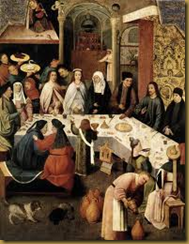
imageThe scribes and Pharisees were sincere in their beliefs and in their reasons for adhering strictly to their doctrines. We must not assume evil of them.[8] They genuinely wanted what was good for their nation and for their people. They sincerely believed that if all would just follow their interpretation of scripture, the Messiah would arrive and all would be better in the world. They weren’t creating boundaries between righteous and unrighteous, clean and unclean because they were malicious, but because they wanted to motivate “sinners” to repentance. In other words, the motivations behind the scribes and Pharisees bear some considerable parallels with modern Christianity.

The big issue the scribes and Pharisees had with Jesus is that he allowed table fellowship without first requiring visible “repentance” from the “sinners.” Jesus was saying, “Come to me, share a meal, and repentance will naturally follow.” Jesus didn’t draw boundaries. All are invited. But he allows people who are uncomfortable with the kind of people he associated to draw themselves out of his circle. In other words, people bring judgment upon themselves. People decide for themselves whether they are in or out.

Those who want to be insiders in Jesus' group must envision themselves reclining next to people whose politics and behavior they find disgusting, and eating out of the same dish with them…[9]

Weddings and Fasting Don’t Mix

The banquet motif continues with this next incident where Jesus is asked why his disciples don’t fast. In response Jesus tells his questioners that it is inappropriate and rude to the host to fast during a wedding feast.

The traditions of the Pharisees designated Mondays and Thursdays each week as days to fast. They did this to express remorse for the past sins of the nation, for repentance for current sins, to express piety, and to look forward to the coming of the Messiah. Disciples of John the Baptist fasted for probably these same reasons. The Baptist had proclaimed the nearness of the Kingdom and thus it would have made perfect sense to express piety in anticipation of the coming.

The puzzlement of those who questioned Jesus on this issue was caused by the fact that Jesus proclaimed the near arrival of the kingdom of God, the day of salvation, but was not showing what his critics regarded as proper preparation by mourning over its delay.[10]

For the Pharisees and the disciples of John the Baptist, repentance and holiness were symbolized through self-denial. Once again Mark shows that both of these concepts were demonstrated quite differently in the actions of Jesus. Two vastly different visions of holiness are on display. Through two parables – the garment-patch and the wine-wineskins – Jesus conveys the message that holiness according to the law is obsolete. The new has come. The old must pass away, or it must adapt.

Lord of the Sabbath
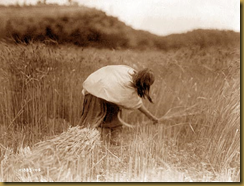
imageThe third story involves the holiness of the Sabbath. The Pharisees question Jesus about actions of his disciples. This is more than a mere academic question. They believed that perfect adherence of the Sabbath by all Jews would usher in the Messianic Age.[11] For a teacher of the Law to condone or sanction breaking of the Law is unthinkable and defeats its very purpose. In their minds, Jesus is acting against the nation!

In response Jesus alludes to a story of David when he “breaks” the Law regarding scared food. This Davidic incident takes place while he is running from Saul, the anointed king of God. In doing so Jesus identifies himself as the leader of fugitives. Jesus defends the actions of his disciples. Note that the disciples did not ask Jesus first or get his permission before “harvesting.” Rather they do so, and in response to accusations, Jesus defends them.

Jesus casts his lot with the oppressed and the marginalized. The Sabbath commandment in both Exodus 20 and Deuteronomy 5 is given to remind the Hebrews that all humankind was created equal and deserve a time to rest. On the Sabbath people are commanded to relate to one another as equals. It doesn’t matter that outside of the Sabbath one is master and another slave, male and female, citizen and non-citizen, parent and child – on the Sabbath power, privilege, hierarchies, and authorities must be subordinated to equality (c.f., Galatians 3:28).

The Sabbath is a reminder that all humankind was created in the image of God (Genesis 1:27) and that it was very good (Genesis 1:31). When God declares the seventh day holy (Genesis 2:3), I believe it includes all of creation. The day by itself would be meaningless without all that came before and all that it represents. Thus I believe the seventh day represents completeness, perfection, Shalom, and holiness.

Humankind is holy at the end of Creation Week. It is at the Fall that humans become less than human. With the Incarnation, Jesus comes to reverse the Fall and restore humanity to its fullness. Humanity does not become holy by trying to become more like God. Humanity becomes holy by learning to become fully human as was originally intended in Creation. By becoming fully human, the image of God is restored. By becoming fully human, we become the image of God.

It isn’t wrong to want to bear the image of God, but I think for far too long Christianity has taught the wrong means. It has taught holiness that bears much resemblance to the kind of holiness espoused by the Pharisees of old. I believe what we need is to embrace the kind of holiness Jesus demonstrated: that of becoming fully human as God originally intended for us. And part of the gospel is to help those around us become more fully human. If we do not, we risk missing Jesus just as the Pharisees missed him. We can be so sincere in holding onto beliefs we are convinced are right that we miss Truth.

image

Jesus is Lord of the Sabbath because he chose to fully embrace humanity and taught his followers to do the same.

To side with Jesus will mean for the audience of the Gospel the loss of any claim to righteousness, the loss of the prerogative of avoiding unpleasant people, and the loss of absolute certainty about biblical interpretation.[12]


[1] Reading Mark: 2:13-14.

[2] Feasting: Mark, location 2665.

[3] NICNT: Mark, 2:17.

[4] Bailey, Kenneth E. Jesus Through Middle Eastern Eyes, p. 246, footnote 15.

[5] NICNT: Mark, 2:15-16. “The term is technical in this context for a class of people who were regarded by the Pharisees as inferior because they showed no interest in the scribal tradition.”

[6] Feasting: Mark, location 2676.

[7] UBC: Mark, 2:13-17.

[8] UBC: Mark, 2:16 note.

[9] Reading Mark: 2:15-17.

[10] UBC: Mark, 2:18-22.

[11] UBC: Mark, 2:23-28.

[12] Reading Mark: 2:18-22.

Saturday, July 5, 2014

004-Signs of Conflict

In order for God to reign, all other powers must abdicate or be defeated, even the powers that claim to represent God.[1]

The next three episodes begin a series of conflicts and confrontations that will accompany Jesus throughout his ministry. These include:

  1. Conflict between people’s expectations of a Messiah vs. one that is true to God’s will,
  2. Conflict between social and cultural traditions vs. what restoration to community will require,
  3. And conflict between religious traditions and laws vs. the reality of God’s kingdom.

Moving On

After the people of Capernaum see Jesus at work they clamor for more. But it is not faith that they exhibit. The disciples, too, are unaware of Jesus’ mission. How can a leader lead if he rejects popular acclaim? But that is exactly what Jesus does.

imageHe has come to bring judgment. Judgment, in this context means that the people are confronted with the message and demonstration of God’s power, and they are forced to make a decision about their priorities and who/what they will give their lives over to; i.e., repentance.

Jesus does not see repentance and faith so he must move on. He goes to prayer because he is tempted to stay and accept the “easy way.”

Our church folks need to hear about how Jesus faces and rejects the temptation to live for himself, rather than for God. They face these same temptations for fame and glory and power, which can corrupt even the most faithful.[2]

It is interesting to note that Jesus’ ministry is summarized by preaching in synagogues and casting out demons, quite likely in the synagogues following the pattern found in 1:21-27. What does this say about the so-called “sacred spaces” that people have created and defined? What does this say about our churches?

Restoring the Untouchable

imageIn the next episode Jesus encounters one that society has ruled unclean, untouchable, literally outside the normal relationship patterns. Even though from a strict regulation standpoint, a leper is not completely cast out of community (something that was a new revelation to me during this study[3]) in practical terms the social stigma is great. One could liken it to a public drunkard or drug addict in today’s society: they are typically shunned from association with “respectable folks” and regarded as someone with less than full human dignity.

Jesus’ attitudes and words are a bit strange in this story. There have been different interpretations in regards to it, but one that I found intriguing and making sense rhetorically is that this may have been transmitted originally as a second exorcism story. (See discussion outline for more on this.)

At one stage in the transmission of the final story in this panel the leprosy afflicting the man whom Jesus heals may have been thought of as a demon.[1]

“Demons” in mark need not be seen as literal demons but anything “society demonizes or regards as God’s punishment.”[5]

Jesus touches the leper, directly acting against social traditions regarding the unclean. By this act Jesus shows that restoration to full human dignity and relationship is of primary concern in the “gospel of God.”

The former leper, rather than following Jesus’ instructions begins to immediately announce the healing. I believe Mark includes this act of direct disobedience to show that this man too, has failed to repent.

The Authority to Forgive

Jesus returns to Capernaum and tries to remain quiet but soon he is found out. A crowd gathers at “his home,” quite possibly Peter’s mother-in-law’s home. The crowd is rarely a good thing in the Markan account. They don’t repent and they often block access to Jesus from the very people that need him most.

I’ve often heard sermons and such focusing on the personal sin and guilt of the paralytic, the faith of his four friends making up for the lack of his, and the failure of the scribes to recognize Jesus when he “clearly” demonstrates who he is. But each of these may be misinterpretations, or at the very least there are other ways to interpret the story.

In regards to Jesus declaring that the paralytic’s sins are forgiven, it need not be understood that Jesus is speaking of any specific sin or guilt. The “lack of faith” on the paralytic is premised on the interpretation that his guilt was interfering with his faith. If we take away personal sin and guilt, then we also remove his personal lack of faith.

The story neither names a specific sin committed by the paralytic nor mentions anything at all about guilt; there is no specific connection between sin and sickness. Jesus does not say that sin causes the paralysis. It may be helpful here to look beyond what Jesus says (“Son, your sins are forgiven,” v. 5b) to what Jesus does.[6]

While Jesus does tell the paralytic that his sins are forgiven, he never once implies that he is sick because he sinned.[7]

Verse 10 reads “’But that you may know that the Son of Man has authority on earth to forgive sins’ —he said to the paralytic— …” (ESV)

imageTranslations typically include these words in quotations, meaning it is interpreted as Jesus saying this to those present in the house. From this it is interpreted that the scribes should have known by the end of the episode that Jesus was more than just a man. But that is not how the text ought to be read.

Verse 10 is Mark’s commentary. He is writing an aside for his audience, the readers of the gospel account. He is telling us what this story means for us. The crowd, including the scribes, do not understand who Jesus is. But as readers we are being given an inside look into evidence of Jesus’ authority – here the authority to forgive sins. (The discussion outline contains more on why the scribes would not have come away from this encounter with the knowledge that Jesus was divine.)

For us it is important to note that the man nor his friends ever asked Jesus for forgiveness. There is also no record of confession or repentance. Jesus simply forgives and heals as proof of his authority.

… One can see that this story is about the house meeting—that is, the early Christian liturgy—as a locus of forgiveness. That is to say, this episode calls upon the assembly to forgive.[8]

Our church communities are called to declare forgiveness just as Jesus forgave. When people around us, outside the church, are suffering because of guilt feelings (rightly or wrongly, that is not our concern), we are to offer forgiveness in the name of God. We offer forgiveness whether or not we think there is any confession or repentance. We do this to bring wholeness and restoration to the world around us. 

But What About the Broken Roof?

Sermons on this story often dwell at length on the broken roof. Here are a couple brief points that I found that I hadn’t heard before:

Mark’s story implies that when Jesus is home, the house itself is vulnerable to the collateral damage of those who relentlessly seek him, his healing, and his forgiveness. The word is a word to the church.[9]

Perhaps the roof in Mark 2 is a way of keeping the Other at bay. The walls and roof of a house are designed to keep out anything unwanted. Yet this house is special, because Jesus is visiting it. He has shown up at the meeting in the house, and therefore the purpose of this house meeting is forgiveness, and if those who need forgiveness cannot fit through the door, they might just have to tear a hole in the roof. Suddenly the barrier is gone, and those inside must acknowledge those outside.[10]

Are the roofs and walls of our churches “broken”? If not, why not?

image


[1] Reading Mark, "Controversies - 2:1-3:6"

[2] Feasting: Mark, location 1987.

[3] NICNT: Mark, 1:40. “Lepers were allowed to live unhampered wherever they chose, except in Jerusalem and cities which had been walled from antiquity. They could even attend the synagogue services if a screen was provided to isolate them from the rest of the congregation.”

[4] Reading Mark, 1:21- 27 (A) and 1:40- 45 (A').

[5] Feasting: Mark, location 2198.

[6] Feasting: Mark, location 2381.

[7] Feasting: Mark, location 2468.

[8] Feasting: Mark, location 2324.

[9] Feasting: Mark, location 2329.

[10] Feasting: Mark, location 2340.